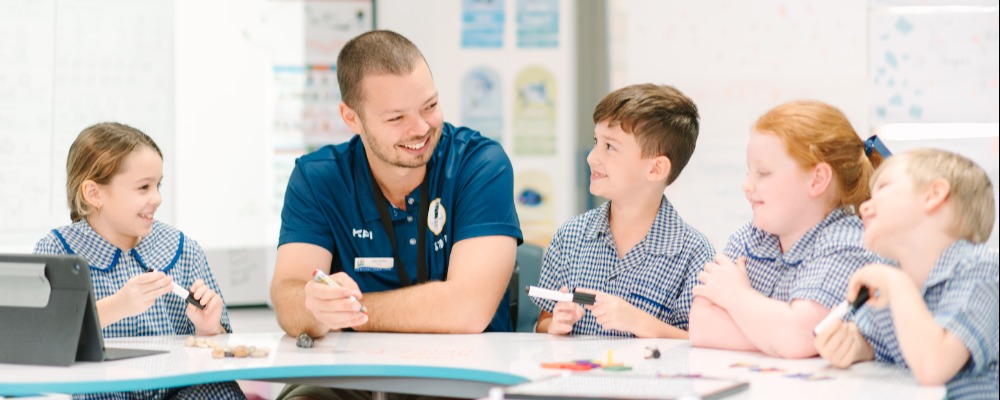
Our aim is to develop a love of learning and to encourage life-long learners at our school. The Prep to Year 10 Curriculum is the basis of teaching and learning in most Queensland schools. At St William’s School we follow and adhere to these teaching and learning areas.
The curriculum for each learning area specifies what should be taught and assessed. These learning areas are:
- Religious Education
- English
- Mathematics
- Science
- Technologies
- Humanities and Social Sciences
- The Arts
- Languages
- Physical Education
Catholic schools are guided by the formal curriculum outlined by the Australian Curriculum, Assessment and Reporting Authority (ACARA) and, during the transition to a fully national curriculum, the Queensland Curriculum and Assessment Authority (QCAA) Syllabus Documents also continue to guide teaching and learning in some learning areas. The exception is our Religious Education curriculum. The Archdiocese of Brisbane determines the curriculum for Religious Education which is currently being revised to align with the national curriculum. It is mandatory that all teachers in Catholic schools be qualified to teach Religion.
These learning areas are greatly enriched by the work of specialist teachers at St William’s School. Cultural literacy is enhanced through Languages by our Japanese teacher and through the Arts program, with a special emphasis on music and visual arts. The Arts as well as Physical Education are both coordinated by specialist teachers. All classrooms have interactive white boards and internet access, as well as the use of iPads.
Our Support Teachers: Inclusive Education assist in the coordination of programs which are designed to meet the individual needs and abilities of all children in our school and ensure that there is a flexible approach to curriculum.
Happy, well-adjusted students with high levels of self-esteem make good learners, therefore pastoral care programs are an important part of the Catholic curriculum at St William's. We are a caring community ready to support children and their families.
As a parent or carer you play a vital role in your child's learning. Building a positive relationship between home and school plays an important part in the education of your child. Talking with the school may help you in communicating with staff throughout the P–10 years. Parents can provide a positive approach to education at a time when children begin to develop skills and attitudes to influence their own learning.
Parents can take an interest in their child's learning by:
- Talking to their child's teacher
- Attending parent-teacher meetings
- Taking an active interest in what their child is doing in the classroom.
Additional Resources
Brisbane Catholic Education Learning Framework
Australian Curriculum Website